The Aesthetic and Functional Role of Pergolas and Garden Arbors in Professional Landscape Design
At Giovanni’s Designs, we approach every outdoor space as an opportunity to create something that is both beautiful and deeply personal. Our team has spent years crafting landscapes that balance artistry with purpose, and few elements deliver that balance as elegantly as a well-placed arbor or pergola. These structures have been centerpieces of garden design for centuries, and today they are more popular than ever. The global pergola market is projected to reach nearly $6 billion by 2032, driven by homeowners who want outdoor spaces that feel like genuine extensions of their homes. Whether you are envisioning a vine-draped garden arbor that frames a romantic pathway or a bold pergola that anchors an outdoor entertaining area, Giovanni’s Designs has the expertise to bring that vision to life with craftsmanship that lasts. We are passionate about creating spaces our clients are proud to share, and every project starts with listening to exactly what you want your garden to say.
Arbors vs. Pergolas: Understanding the Difference
People often use these two terms interchangeably, but they serve distinct design purposes and understanding the difference helps you choose the right structure for your space.
An arbor is typically a smaller, more intimate structure, most often an arched or tunnel-shaped framework designed to support climbing plants like roses, wisteria, or jasmine. Arbors are ideal as garden entry points, pathway markers, or quiet focal features within a planting bed. They draw the eye, create a sense of arrival, and when covered in flowering vines, become one of the most romantic elements a garden can offer.
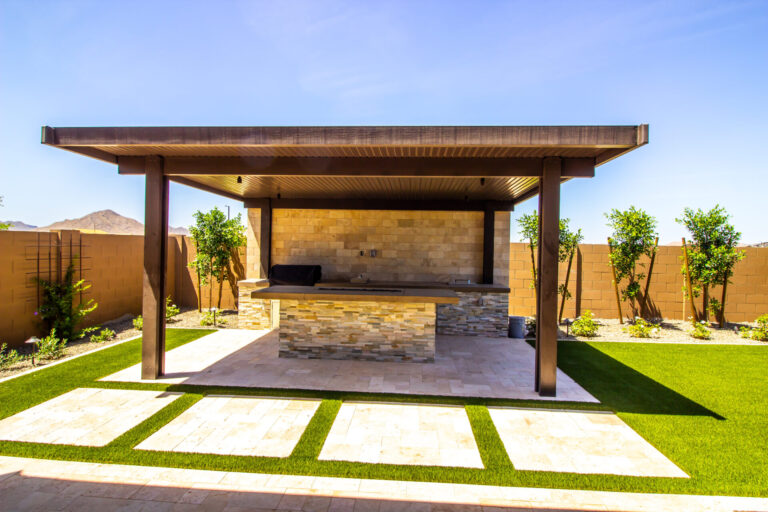
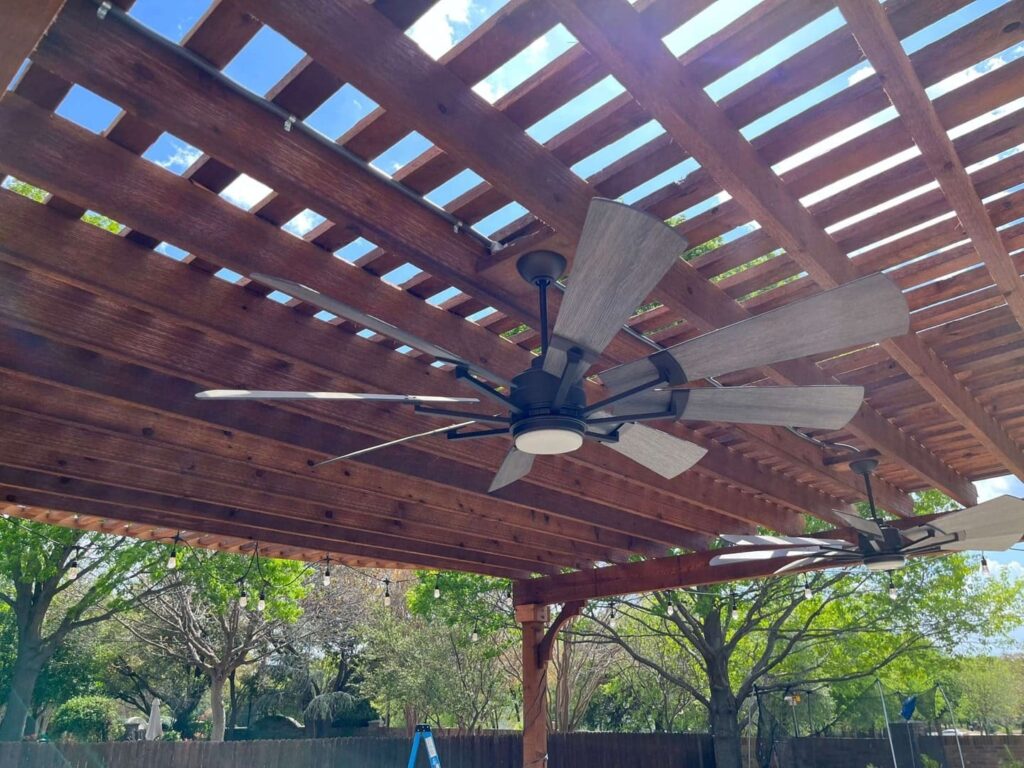
A pergola is a larger, more architectural structure with an open roof of crossbeams and rafters supported by vertical posts. Pergolas define outdoor living zones, provide partial shade, and serve as the structural backbone for an outdoor entertaining space, a dining area, or a garden retreat. They can stand free in a yard or attach directly to the home, creating a seamless flow between interior and exterior living.
Both bring structure, vertical interest, and a sense of intention to a landscape that flat plantings alone simply cannot achieve.
The Functional Role These Structures Play
Beyond their undeniable visual appeal, arbors and pergolas solve real problems in landscape design.
Shade without enclosure. A pergola filters sunlight rather than blocking it entirely, creating the kind of dappled, comfortable shade that makes an outdoor space usable even in the warmest months. For gardens that get full afternoon sun, this is a genuine quality-of-life upgrade.
Defining space within a larger yard. Open lawns and expansive patios can feel undefined and difficult to furnish. A pergola creates a room without walls, giving a seating or dining area its own identity within the broader landscape. This is especially valuable on larger properties where the backyard needs visual structure to feel intentional rather than empty.
Supporting plant life in three dimensions. Gardens that exist only at ground level miss an entire dimension of design potential. Arbors and pergolas invite climbing plants upward, adding lushness, fragrance, and seasonal color at eye level and above. Wisteria, climbing hydrangea, trumpet vine, and climbing roses are all excellent choices that transform a bare structure into a living, breathing feature over time.
Adding measurable property value. Outdoor living upgrades consistently deliver strong returns. Real estate professionals report that well-designed outdoor spaces can yield an ROI of 80 percent or more, and pergolas specifically are among the features that attract today’s buyers.
Design Tips for Getting It Right
A few principles guide the most successful arbor and pergola installations:
Scale matters more than most people expect. A pergola that is too small for its surroundings will look like an afterthought. A structure that overwhelms a compact garden creates the wrong impression entirely. At Giovanni’s Designs, we always begin by studying the proportions of the space before recommending a size or configuration.
Material sets the tone. Wood, particularly cedar or redwood, delivers warmth and a classic garden aesthetic that ages gracefully. Aluminum and composite materials offer a cleaner, more contemporary look with significantly less maintenance. The right choice depends on your overall design style, your local climate, and how much upkeep you are willing to commit to over time.
Orientation shapes the experience. Where a pergola sits in relation to the sun, your home, and your garden views will determine how enjoyable the space actually is. An improperly oriented structure can create glare or block a beautiful sightline. Thoughtful placement considers all of these factors before the first post goes in the ground.
Climbing plants need a plan. If you want vines, choose species that suit your climate and growth goals. Fast-growing climbers like Virginia creeper fill a structure quickly but require regular management. Slower-growing flowering vines like climbing roses reward patience with stunning seasonal displays. Giovanni’s Designs can help you select and plan planting that complements your structure beautifully from day one.
Ready to Add an Arbor or Pergola to Your Garden? Let’s Design It Together.
Whether you are starting from a blank slate or looking to elevate an existing landscape, Giovanni’s Designs is ready to help you create an outdoor space that reflects your style and stands the test of time. Reach out today to schedule a consultation, and let’s talk about what your garden could become.